published
Why Disconnected Systems Are Killing Your Financial Institution
M
Mwelwa Kelvin
Author
Apr 22, 2026
Published
3 min
Read
Introduction
Many financial institutions don’t fail because of lack of customers or capital—they fail because of inefficiency.
One of the biggest hidden causes? Disconnected systems.
Using separate platforms for loan management, HR, and accounting may seem manageable at first. But over time, these fragmented systems create bottlenecks, increase costs, and limit growth.
Modern institutions are moving toward unified platforms like Mankuca to eliminate these inefficiencies and operate at scale.
What Are Disconnected Systems?
Disconnected (or siloed) systems are tools that operate independently without sharing data.
Examples include:
A loan system that doesn’t sync with accounting
HR software that doesn’t track operational performance
Financial reports created manually from multiple sources
Each system works—but not together.
The Hidden Damage Caused by Disconnected Systems
❌ 1. Data Silos
Each department maintains its own data, leading to:
Duplicate records
Inconsistent information
Lack of a single source of truth
This makes decision-making unreliable.
❌ 2. Operational Inefficiency
Employees waste time:
Switching between systems
Re-entering data
Reconciling mismatched records
What should take minutes can take hours—or days.
❌ 3. Increased Risk of Errors
Manual data transfers introduce:
Calculation mistakes
Missing information
Incorrect reporting
Even small errors can lead to major financial consequences.
❌ 4. Delayed Decision-Making
When data is scattered:
Reports take longer to generate
Insights are outdated
Opportunities are missed
In finance, delays can be costly.
❌ 5. Higher Operational Costs
Maintaining multiple systems means:
More subscriptions
Higher IT support costs
Additional training requirements
❌ 6. Poor Customer Experience
Disconnected systems slow down:
Loan approvals
Customer support
Issue resolution
Customers expect speed—delays lead to dissatisfaction.
The Real Cost of Staying Disconnected
Many institutions underestimate the long-term impact of fragmentation.
The real costs include:
Lost revenue due to inefficiencies
Increased risk of fraud and errors
Reduced staff productivity
Inability to scale operations
Over time, these issues can severely affect competitiveness.
The Solution: A Unified System
A unified platform eliminates silos by integrating:
Loan management
Accounting
HR operations
With Mankuca:
Data flows seamlessly across all departments
Processes are automated and synchronized
Management gains full visibility in real time
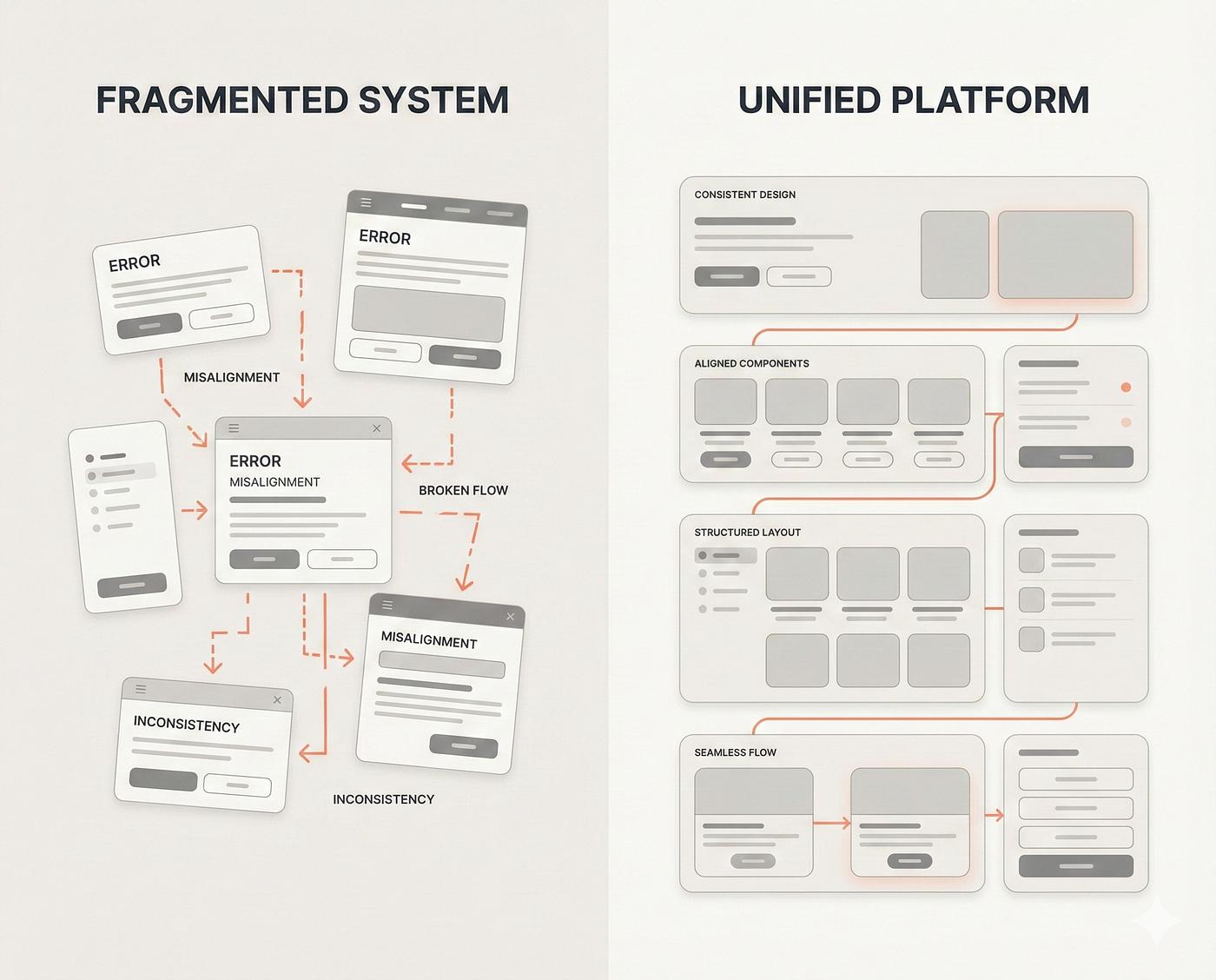
Before vs After Integration
🚫 Before (Disconnected Systems)
Manual data entry
Delayed reporting
Conflicting records
High operational costs
✅ After (Unified System)
Automated workflows
Real-time data updates
Accurate reporting
Reduced costs and improved efficiency
Real-World Scenario
Imagine a loan approval process in a disconnected system:
Loan is approved in one system
Accounting is updated manually later
HR has no visibility into staff performance
Reports are compiled manually
Now compare with a unified system:
Loan approval updates accounting instantly
Staff performance is tracked automatically
Reports are generated in real time
Management sees everything on one dashboard
The difference is transformational.
Why Choose Mankuca?
Mankuca helps eliminate disconnected systems by offering:
✅ Fully integrated loan, HR, and accounting modules
✅ Centralized data management
✅ Real-time reporting and analytics
✅ Automated workflows
✅ Scalable infrastructure
It replaces complexity with clarity.
Conclusion
Disconnected systems are more than just an inconvenience—they are a serious threat to efficiency, growth, and profitability.
Financial institutions that continue to operate in silos risk falling behind in an increasingly competitive market.
By adopting a unified solution like Mankuca, businesses can eliminate inefficiencies, improve performance, and position themselves for long-term success.
Many financial institutions don’t fail because of lack of customers or capital—they fail because of inefficiency.
One of the biggest hidden causes? Disconnected systems.
Using separate platforms for loan management, HR, and accounting may seem manageable at first. But over time, these fragmented systems create bottlenecks, increase costs, and limit growth.
Modern institutions are moving toward unified platforms like Mankuca to eliminate these inefficiencies and operate at scale.
What Are Disconnected Systems?
Disconnected (or siloed) systems are tools that operate independently without sharing data.
Examples include:
A loan system that doesn’t sync with accounting
HR software that doesn’t track operational performance
Financial reports created manually from multiple sources
Each system works—but not together.
The Hidden Damage Caused by Disconnected Systems
❌ 1. Data Silos
Each department maintains its own data, leading to:
Duplicate records
Inconsistent information
Lack of a single source of truth
This makes decision-making unreliable.
❌ 2. Operational Inefficiency
Employees waste time:
Switching between systems
Re-entering data
Reconciling mismatched records
What should take minutes can take hours—or days.
❌ 3. Increased Risk of Errors
Manual data transfers introduce:
Calculation mistakes
Missing information
Incorrect reporting
Even small errors can lead to major financial consequences.
❌ 4. Delayed Decision-Making
When data is scattered:
Reports take longer to generate
Insights are outdated
Opportunities are missed
In finance, delays can be costly.
❌ 5. Higher Operational Costs
Maintaining multiple systems means:
More subscriptions
Higher IT support costs
Additional training requirements
❌ 6. Poor Customer Experience
Disconnected systems slow down:
Loan approvals
Customer support
Issue resolution
Customers expect speed—delays lead to dissatisfaction.
The Real Cost of Staying Disconnected
Many institutions underestimate the long-term impact of fragmentation.
The real costs include:
Lost revenue due to inefficiencies
Increased risk of fraud and errors
Reduced staff productivity
Inability to scale operations
Over time, these issues can severely affect competitiveness.
The Solution: A Unified System
A unified platform eliminates silos by integrating:
Loan management
Accounting
HR operations
With Mankuca:
Data flows seamlessly across all departments
Processes are automated and synchronized
Management gains full visibility in real time
Before vs After Integration
🚫 Before (Disconnected Systems)
Manual data entry
Delayed reporting
Conflicting records
High operational costs
✅ After (Unified System)
Automated workflows
Real-time data updates
Accurate reporting
Reduced costs and improved efficiency
Real-World Scenario
Imagine a loan approval process in a disconnected system:
Loan is approved in one system
Accounting is updated manually later
HR has no visibility into staff performance
Reports are compiled manually
Now compare with a unified system:
Loan approval updates accounting instantly
Staff performance is tracked automatically
Reports are generated in real time
Management sees everything on one dashboard
The difference is transformational.
Why Choose Mankuca?
Mankuca helps eliminate disconnected systems by offering:
✅ Fully integrated loan, HR, and accounting modules
✅ Centralized data management
✅ Real-time reporting and analytics
✅ Automated workflows
✅ Scalable infrastructure
It replaces complexity with clarity.
Conclusion
Disconnected systems are more than just an inconvenience—they are a serious threat to efficiency, growth, and profitability.
Financial institutions that continue to operate in silos risk falling behind in an increasingly competitive market.
By adopting a unified solution like Mankuca, businesses can eliminate inefficiencies, improve performance, and position themselves for long-term success.
Tags:
Loan Management
Accounting
HR System
M
About the Author
Mwelwa Kelvin
Mankuca's editorial board is composed of domain experts in multi-tenant architecture, fintech operations, and human resource capital management across the African continent.